

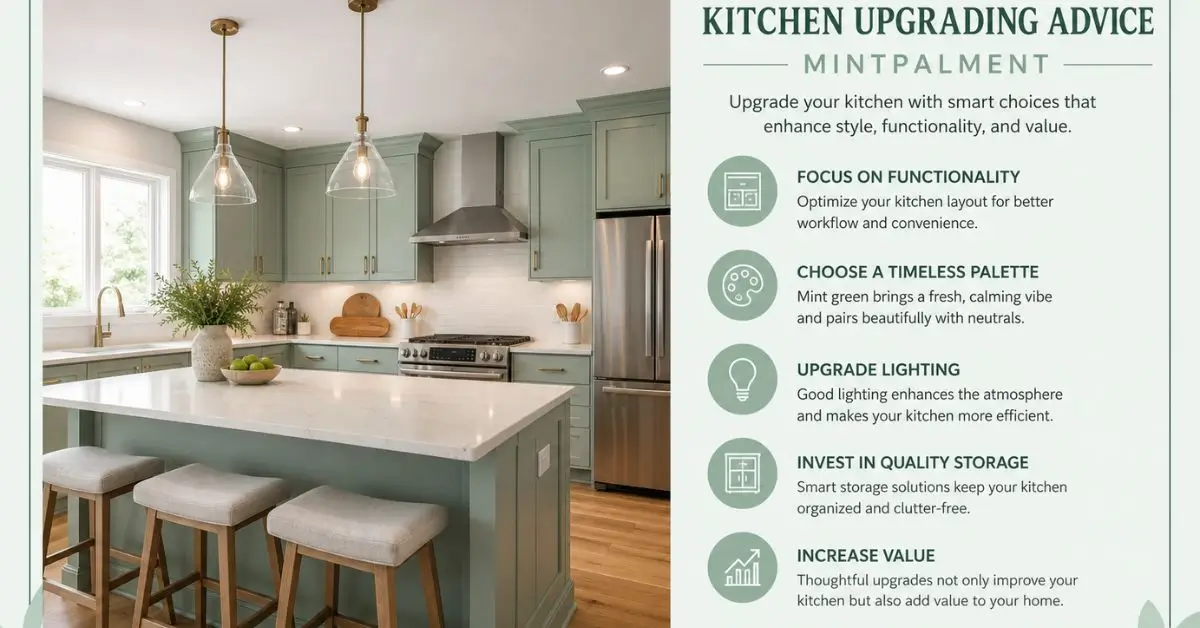
Kitchen Upgrading Advice: Practical Tips That Actually Make a Difference
The kitchen is the most used room in most homes and often the most neglected when it comes to deliberate improvement. It collects wear and clutter quietly over the years until one day the space feels tired, cramped, and frustrating to work in.
The challenge is knowing where to start. A full kitchen renovation can cost anywhere from $15,000 to $80,000 or more depending on the scope and materials. That is a significant investment, and most homeowners reasonably want to know what they can do to make their kitchen genuinely better without committing to a complete overhaul.
The right kitchen upgrading advice mintpalment does not push you toward the most expensive option. It helps you identify the changes that deliver the most value for your specific situation — whether that is $200 spent on hardware or $5,000 spent on new countertops.
This guide covers practical kitchen upgrades at every budget level, what to prioritize first, what to avoid, and how to make smart decisions that improve both how your kitchen looks and how well it actually works.
Kitchen upgrading advice refers to practical guidance on improving a kitchen’s appearance, functionality, and value through targeted changes — ranging from minor cosmetic updates to structural renovations. Good kitchen upgrading advice mintpalment helps homeowners identify the highest-impact improvements for their budget, prioritize changes that add genuine value, and avoid common mistakes that waste money without meaningfully improving the space.
Quick Summary
Kitchen upgrades do not require a full renovation to make a real difference. Smart, prioritized improvements — starting with paint, hardware, and lighting — deliver significant visual impact at low cost. Bigger investments in countertops, cabinets, and appliances make sense when the budget allows and when they address real functional problems, not just aesthetic ones.
Why Most Kitchen Upgrades Fail to Deliver
Before getting into specific upgrade advice, it helps to understand why kitchen improvements often disappoint — because the mistakes are predictable and avoidable.
The most common problem is spending money on visible cosmetics while ignoring functional issues. A kitchen with beautiful new countertops but poor storage, bad lighting, and no counter space near the stove still does not work well. It just looks nicer while being frustrating to use.
The second common mistake is upgrading out of order. Painting cabinets before fixing a plumbing issue under the sink, or installing new flooring before addressing cabinet layout problems, means you often end up redoing work or making the functional fix more disruptive after the fact.
Good kitchen upgrading advice mintpalment starts with function — making the space work better — and then moves to appearance. The best kitchen upgrades do both at once.
Step 1: Start With What Is Actually Broken
Before spending a single dollar on cosmetic improvements, do a honest functional audit of your kitchen.
Walk through these questions:
- Is there enough storage for everything you use regularly?
- Is there adequate counter space near where you actually cook?
- Is the lighting sufficient — especially over the stove and prep areas?
- Are any appliances unreliable, inefficient, or simply the wrong size for how you cook?
- Is the layout creating daily friction — doors that block pathways, drawers that cannot fully open, a sink positioned awkwardly?
Each of these functional problems, if present, should be addressed before or alongside cosmetic work. A kitchen that works well and looks good is the goal. A kitchen that looks good but does not work well is just an expensive disappointment.
Low-Cost Kitchen Upgrades With High Visual Impact
Fresh Paint — Walls and Cabinets
Paint is consistently one of the highest return-on-investment changes you can make in a kitchen. A gallon of quality interior paint costs $30 to $60, and the right color choice can transform a kitchen that feels dark, dated, or generic into one that feels fresh and intentional.
For walls, soft whites, warm creams, sage greens, and light grays work well in most kitchens because they reflect light and create a clean backdrop that does not compete with countertops or cabinets.
Cabinet painting is a bigger project — it requires cleaning, sanding, priming, and multiple coats — but the results are dramatic. A kitchen with dark oak cabinets painted in a clean white or soft navy looks like a completely different space. Professional cabinet painting typically costs $1,000 to $3,000 depending on kitchen size, but DIY cabinet painting with proper preparation can achieve excellent results for the cost of materials.
New Cabinet Hardware
Cabinet handles and pulls are the jewelry of a kitchen — small details that significantly affect the overall look. Replacing dated brass or chrome hardware with brushed nickel, matte black, or warm gold finishes updates the entire kitchen’s aesthetic with minimal effort.
A standard kitchen might have 20 to 30 hardware pieces. At $5 to $15 per piece, a complete hardware replacement costs $100 to $450 and takes a couple of hours with a screwdriver. The visual difference relative to the cost and effort is hard to beat.
Under-Cabinet Lighting
Most kitchens rely entirely on overhead lighting, which creates shadows directly over the prep areas where you actually need the most light. Under-cabinet lighting solves this problem completely and instantly makes a kitchen feel more functional and more polished.
Plug-in LED strip lights are available for $20 to $60 for a full kitchen installation. Hardwired options look cleaner but require an electrician if you are not comfortable with electrical work. Either way, this is one of the most impactful low-cost kitchen upgrades available and is consistently mentioned in kitchen upgrading advice mintpalment from experienced renovators.
Declutter and Organize Visible Storage
Open shelving, visible countertops, and crowded refrigerator doors are among the biggest visual problems in average kitchens — and none of them cost money to fix.
Clearing countertops of everything except the items you use daily creates an immediate visual transformation. A kitchen with clear counters looks twice as large as the same kitchen covered in appliances, mail, and random objects. This is free and reversible — there is no reason not to do it immediately.
For cabinet interiors, pull-out organizers, drawer dividers, and tiered shelf inserts cost $10 to $50 per item and dramatically improve how usable storage space actually is.
Mid-Range Kitchen Upgrades Worth the Investment
Countertop Replacement or Refinishing
Countertops have a major influence on how a kitchen looks and feels. Dated laminate counters — even in a well-maintained kitchen — signal age immediately. Replacing them with quartz, granite, or butcher block changes the entire character of the space.
Quartz countertops are the most popular choice currently because they are durable, non-porous, low-maintenance, and available in a wide range of styles including realistic stone looks. Installed cost typically ranges from $50 to $120 per square foot depending on the material and region.
For homeowners not ready to replace countertops, refinishing or resurfacing existing laminate surfaces is a lower-cost alternative. Professional countertop resurfacing can cost $300 to $800 for a standard kitchen and adds several years of useful life to existing surfaces.
Backsplash Installation
A new backsplash is one of the most efficient ways to add personality and character to a kitchen without disrupting the entire space. Subway tile, mosaic patterns, and large-format tiles in natural stone or porcelain are all popular options that work well in most kitchen styles.
Materials typically cost $5 to $30 per square foot, and a standard kitchen backsplash area — behind the stove and along the countertop — covers roughly 15 to 30 square feet. Professional installation adds $10 to $40 per square foot depending on tile complexity and location.
DIY tile installation is achievable for homeowners with patience and basic tiling skills. Subway tile in a straight horizontal pattern is one of the more forgiving DIY backsplash projects.
Faucet Replacement
A kitchen faucet is used dozens of times per day — which makes it one of the most noticeable fixtures in the room. Replacing a dated or poorly functioning faucet with a modern pull-down sprayer faucet in matte black, brushed nickel, or warm brass adds both function and style.
Quality kitchen faucets range from $100 to $400 at most home improvement stores. Installation is straightforward for DIYers comfortable with basic plumbing — turn off the water supply, disconnect the old fixture, and install the new one using the instructions provided.
Larger Kitchen Upgrades for Maximum Impact
Cabinet Refacing or Replacement
If your cabinet boxes are structurally sound but the doors and drawer fronts are dated, refacing is a cost-effective middle ground between painting and full replacement. New cabinet doors, drawer fronts, and matching veneer on the cabinet sides give the kitchen a completely updated look while keeping the existing cabinet structure.
Cabinet refacing typically costs $4,000 to $9,000 for an average kitchen — significantly less than full replacement at $15,000 to $30,000 or more, while achieving most of the visual impact.
Full cabinet replacement makes sense when the existing cabinet layout is genuinely problematic — when the boxes are damaged, the storage configuration does not work, or you want to add features like a kitchen island or pantry cabinet that require structural changes.
Appliance Upgrades
New appliances have a dramatic effect on both kitchen appearance and function. Mismatched or outdated appliances date a kitchen visually, while a coordinated set in stainless steel, black stainless, or matte black creates a cohesive, updated look.
From a functional standpoint, modern refrigerators, dishwashers, and ranges are meaningfully more efficient than appliances from 10 or more years ago — which translates into real utility savings over time.
A realistic US example: a homeowner in Seattle replacing a 15-year-old refrigerator, stove, and dishwasher with a coordinated stainless steel set from a mid-range brand might spend $3,500 to $5,500 total. The energy savings on the refrigerator and dishwasher alone can recover a portion of that cost over five to seven years.
Kitchen Upgrade Priority Guide by Budget
| Budget Range | Best Use | Expected Impact |
|---|---|---|
| Under $200 | Hardware, paint, lighting strips, organizers | High visual and functional impact |
| $200–$500 | Faucet replacement, backsplash DIY, deep declutter | Significant update to key touchpoints |
| $500–$2,000 | Countertop resurfacing, professional backsplash, lighting fixtures | Major visual upgrade to primary surfaces |
| $2,000–$6,000 | Cabinet painting or refacing, countertop replacement | Transformative refresh without full renovation |
| $6,000–$15,000 | Appliance replacement, partial cabinet replacement, layout changes | Near-renovation level results |
| $15,000+ | Full kitchen renovation | Complete transformation |
What Not to Spend Money On
Part of genuinely useful kitchen upgrading advice mintpalment is being honest about what does not deliver value.
Trendy finishes that will date quickly. Very on-trend colors or materials — the fashionable choice of the moment — tend to look dated within five to eight years. Timeless choices like white and soft neutrals, classic subway tile, and natural stone patterns hold their appeal far longer.
High-end appliances in a low-end kitchen. A $5,000 refrigerator in a kitchen with laminate counters and dated cabinets is a mismatched investment. Upgrade in a balanced way — the sum of the kitchen should be consistent in quality.
Premium materials in a rental property. If you are upgrading a rental kitchen, durable and attractive mid-range materials make more sense than premium options. Quartz countertops in a rental add cost without proportional rental value return.
Frequently Asked Questions
What is the most cost-effective kitchen upgrade?
Replacing cabinet hardware and adding under-cabinet lighting are affordable upgrades that instantly improve your kitchen’s look and functionality.
Does kitchen upgrading add home value?
Yes. Kitchen upgrades can increase resale value, especially low-cost improvements like paint, lighting, and hardware.
Should I upgrade my kitchen before selling?
Yes, but focus on budget-friendly updates such as fresh paint, new hardware, better lighting, and decluttering instead of a full remodel.
How long does a kitchen upgrade take?
Small upgrades take a weekend, while larger remodels can take several weeks depending on the project.
What kitchen upgrades should I avoid doing myself?
Leave electrical, gas, structural, and major plumbing work to licensed professionals. Painting, hardware, and backsplash installation are suitable DIY projects.